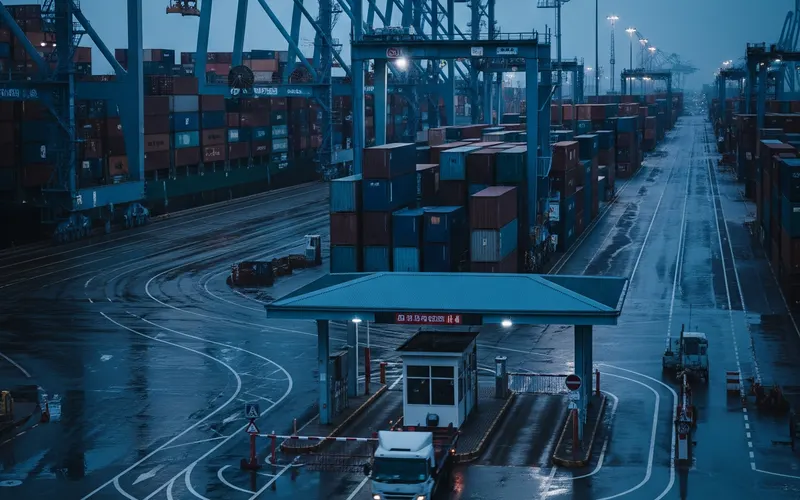
In export, the container customs decides to inspect loses hours or days. The one that goes straight through, wins. The difference between the two, at more and more ports around the world, is a seal.
What an RFID bolt seal is
It's the same security bolt as always — the one that locks the container — with an RFID chip inside. It adds two things the mechanical seal can't: a serial number burned into the chip, practically impossible to duplicate (a mechanical seal can be cloned; the serial can't), and automatic reading: a portal or a handheld verifies the seal without anyone climbing up to check it. If the seal was cut or tampered with, it gives itself away — or simply stops reading.
The India case: seals that open green lanes
India turned it into national policy: its customs allows certified exporters to self-seal containers with RFID e-seals. On arrival at the port, the seal is verified electronically — and the container with an intact seal goes through the green lane: no routine physical inspection, straight to loading. The incentive is enormous: whoever adopts the smart seal exports faster.
That work was carried out by ID Tech Solutions (India), the manufacturer whose seals we distribute in Central America: 15+ years manufacturing RFID seals, the first supplier in its country to meet ISO 17712:2013(H) and C-TPAT, and an approved vendor for Indian customs (CBIC) export-container e-sealing. As its authorized distributor, TYR & SYN brings that same capability —and that backing— to the region.
What it means for an exporter in the region
- Provable integrity: the container arrived as it left — with electronic evidence, not just an intact bolt.
- Verification on the move: yards and carriers validate seals without stopping the operation.
- Ready for what's coming: secure-trade programs are moving toward electronic verification; adopting it early is an advantage, not a cost.