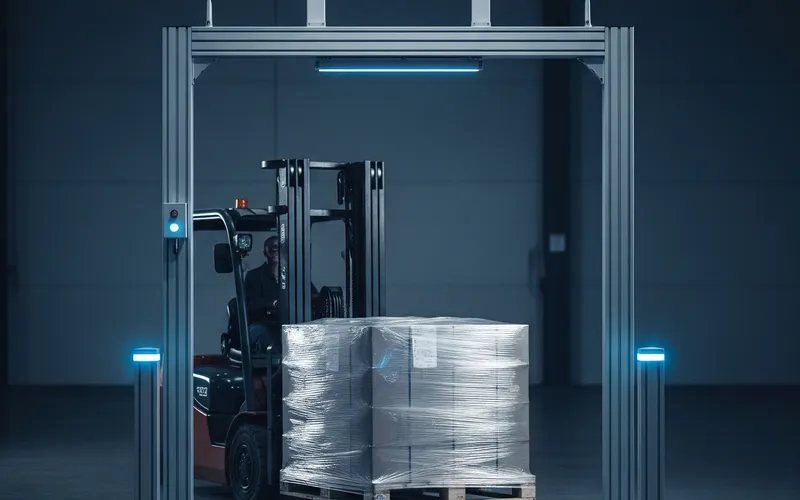
The most reasonable objection to RFID is this: «sounds good, but I don't know if it works in my operation». It's reasonable because it's true — radio frequency behaves differently depending on the material, the environment and the process. That's why a serious project doesn't start by buying equipment: it starts with a pilot that answers that question with data.
What a pilot validates
One thing: that the technology reads your materials, in your process, at the rate the business needs. Metal reflects the radio signal; liquids absorb it. A tag that reads perfectly on a cardboard box can fail on a metal rack or a crate with wet product. The right tag isn't chosen from a catalog — it's chosen by testing on the real material.
How it's structured
- One critical point, not the whole operation. You pick the process where the problem costs the most — a receiving dock, a gate, a weighbridge — and instrument only that.
- Metrics agreed before starting. Minimum read rate, cycle time, accuracy against a manual count. If «success» wasn't defined beforehand, any result can be dressed up afterwards.
- Bounded equipment. Tags on a real batch of product or assets, one installed read point, and the software logging every event. Weeks of real operation, not a one-afternoon demo.
What you get at the end
Numbers, not impressions: the read rate measured in your environment, the real cost per tagged unit, and the impact on the problem you set out to solve. With that, scaling stops being an act of faith — it's a business decision with the case already written. And if the result doesn't hold up, you know that too: that's why the pilot is bounded in cost and time.
The signs of a badly framed pilot
- No success metric agreed in writing — «let's see how it goes».
- It tries to test the whole operation at once, instead of one critical point.
- Someone promises a 100% read rate before testing on your material.
Where to start
Before the pilot comes the diagnostic: identifying which process the problem costs the most in, and whether RFID is the right tool — sometimes it isn't, and we say that too. That conversation takes 30 minutes and costs nothing.