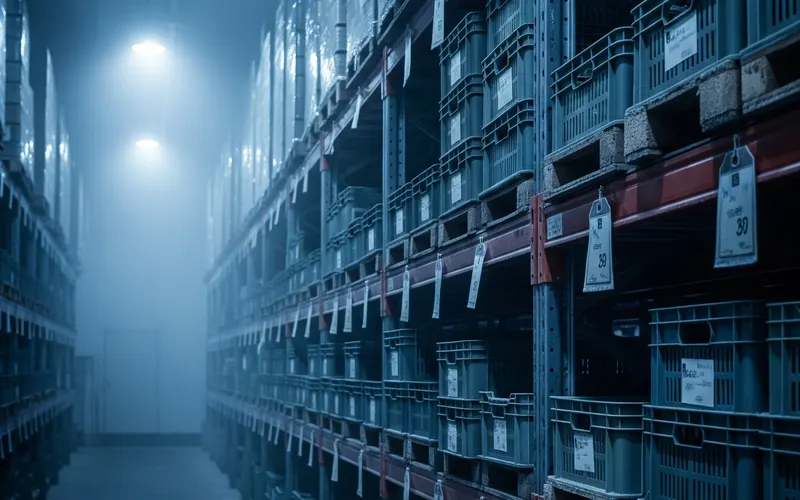
Every cold chain has the same blind spot: between the product leaving the plant and reaching the customer, nobody can prove what temperature it lived through. When a claim comes, it's word against word — and the cost lands on whoever can't prove.
The usual options: expensive or incomplete
- Data loggers: they record well, but cost tens of dollars per unit, and must be recovered and downloaded — few trips justify them.
- Spot thermometers: they measure the moment of inspection, not the journey. The product may have frozen and thawed without leaving a trace.
- The truck's thermometer: it measures the container's air, not the pallet at the back — and the record belongs to the carrier, not to you.
Sensor RFID tags: the measurement travels with the product
There are RAIN RFID tags with temperature and humidity sensors that cost a fraction of a data logger. They stick to the crate, pallet or box, and at every checkpoint — dispatch, receiving, transfer — the reader captures the measurement along with the tag's unique serial number.
That changes the nature of the data: the measurement is tied to that specific pallet, with date, time and place. It's not a container average or a note on paper — it's per-unit evidence.
That read flows into Ode, our control platform, tied to the unit along with its production and expiry dates. With that, the shelf-life monitor orders inventory by days remaining —first to expire ships first (FEFO), not whatever's closest to hand— and a cold-chain break is logged against that pallet, ready to pull up when the claim arrives.
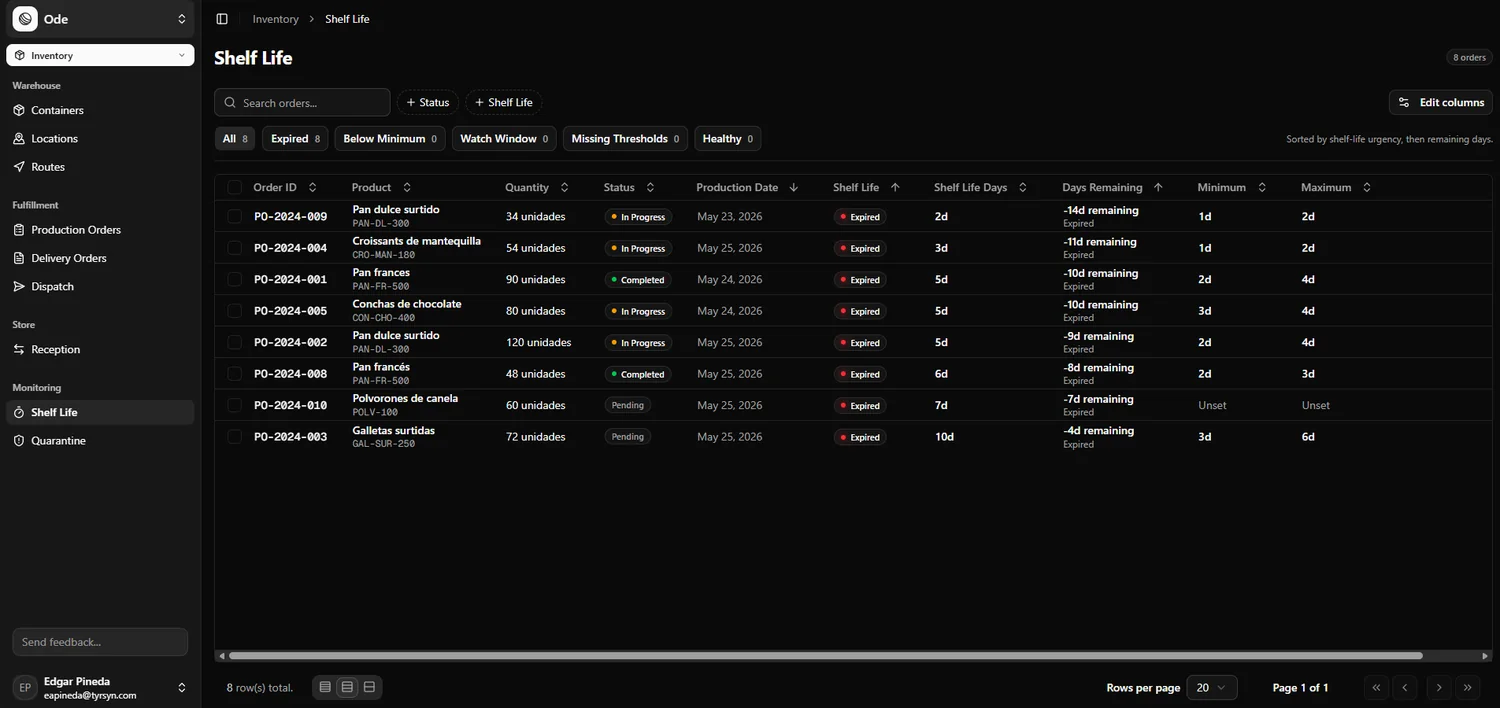
 Ode Shelf life by days remaining: first to expire ships first.
What you need to know to choose
Passive sensor tags (no battery) measure at the moment of the read: ideal for verifying critical points at minimal cost. If you need a continuous record of the whole route, battery-assisted versions log the full journey — more capable, more expensive. Choosing the right level for each product is exactly where a controlled pilot pays: measuring the precise point where your chain breaks, without over-investing.
Where it pays first
- Perishables export: evidence of an intact chain for the buyer and the insurer.
- Food distribution: detecting the route or the dock where the cold breaks.
- Claims: going from arguing to consulting that unit's history.