It's the meeting that repeats in every operation: the system says 1,240 units, the warehouse finds 1,178. The last count gets blamed, the ERP gets adjusted, and in three months the gap is back. How big is normal? Industry studies place the typical accuracy of inventory without automatic capture between 60% and 75% — if you're there, you're not the worst: you're average. The point is you don't have to stay there.
Where the gap comes from
- Capture arrives late. The physical movement happens at 8:00; someone types it in at 17:00 — if they type it at all. Between those two moments, the system describes a warehouse that no longer exists.
- Some movements never get recorded. Urgent dispatches, loans between warehouses, shrinkage, rework. Each one is a unit the system keeps counting.
- Reconciliation patches, it doesn't fix. The inventory adjustment absorbs the difference without explaining its cause — and the cause stays there, generating the next gap.
Why counting more often doesn't fix it
Manual counting is expensive: it stops the operation, ties up people and takes whole shifts. So it's done rarely — and an inventory counted every six months is five and a half months out of date. Worse: manual counts also make mistakes, so every cutoff introduces its own error.
How the gap actually closes
The gap exists because recording is a separate act from moving. The solution is for the movement to be the record: every product carries an RFID tag with a unique serial number, and the critical points — receiving, shipping, transfers — automatically read everything that passes. The event enters the ERP the moment it happens, with no typing.
The serial number matters: an RFID read is evidence that that specific unit was physically there. It can't be over-typed, duplicated or invented — the difference between captured data and declared data.
Those events live in Ode, our control platform, where every unit exists with its tag, its location and its owner. That's why the count stops being an investigation: you sweep the area, every unit responds, and the system flags only what's missing or has moved. The audit becomes a verification, not a full day's work.
What changes in practice
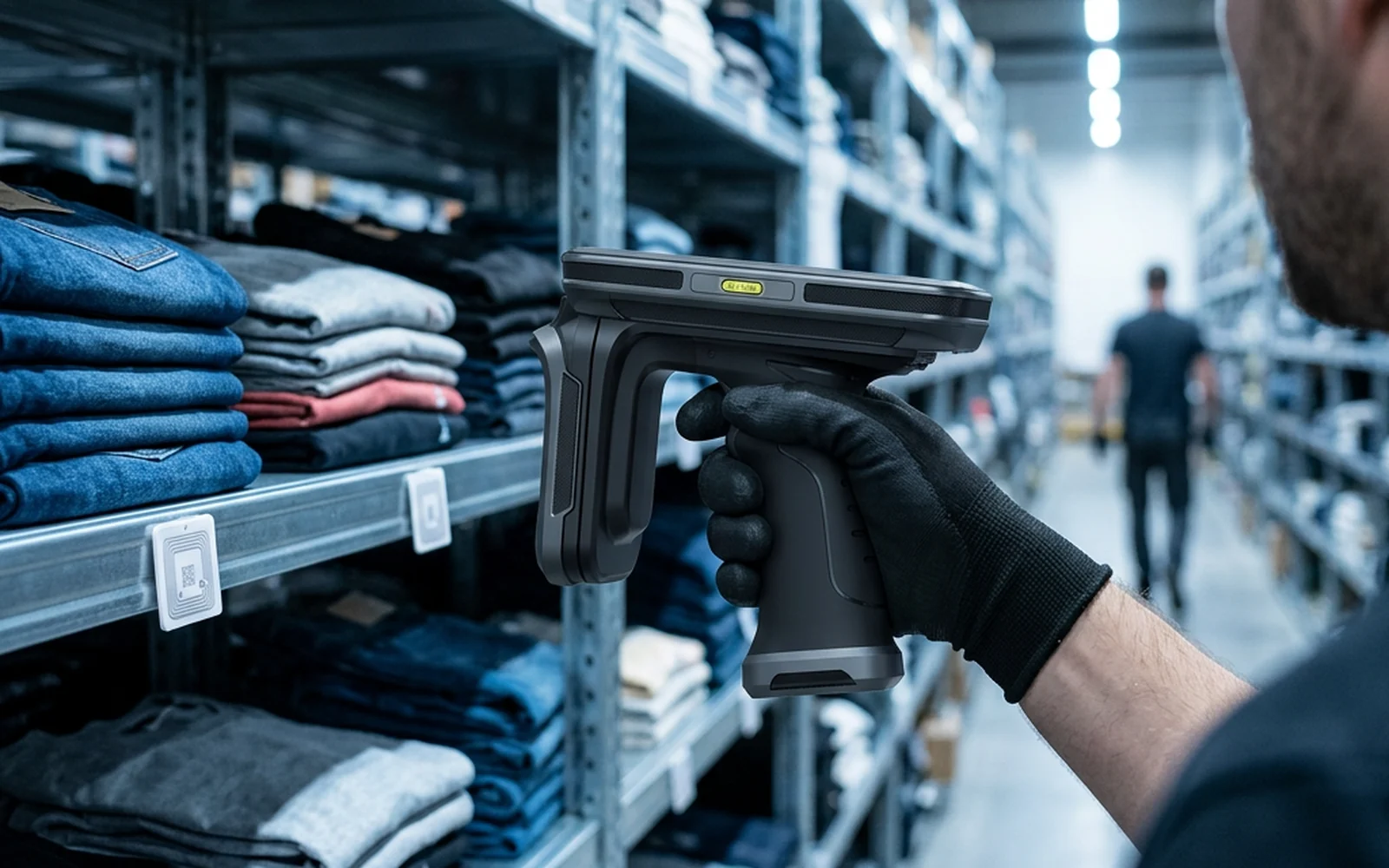
- A warehouse count goes from shifts to minutes: you sweep the area with a reader and hundreds of tags respond at once, without moving a single box.
- Counting stops being expensive, so it gets done often — and the system converges toward the physical count instead of diverging between cutoffs. Operations that sustain that rhythm run at accuracies above 95%.
- Inventory adjustments stop being a mystery: every difference has a trace of where and when it originated.
Where to start
Not by buying equipment. The first step is identifying which process the gap costs the most in — and validating there, with a controlled pilot, that automatic capture closes it. With the impact measured, scaling is a business decision, not an act of faith.