In a fleet, tires are one of the highest operating costs — and almost nobody knows how many they have, where they are or how far they've run. With RFID and Ode, each tire stops being an anonymous consumable and becomes an asset with an identity, a position and a history.
Every vehicle and every tire, identified
Each vehicle exists in Ode with its plate, its RFID tag and its odometer; and each tire, mounted in its exact position per axle. The mounted-tires view shows at a glance which positions are complete and which need attention.
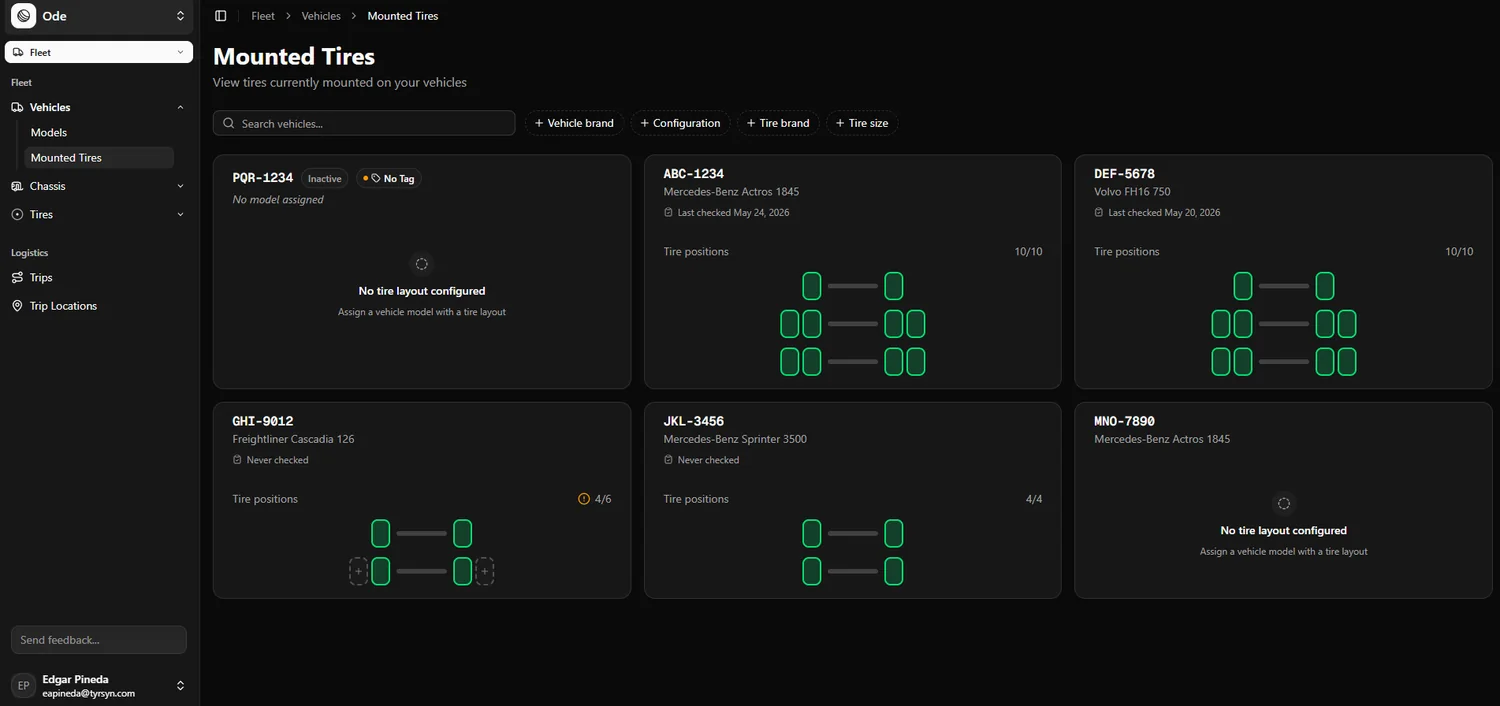
Position matters
A steer tire is not a drive tire. Ode records each position —axle, side, inner or outer— with the tag, brand, size and serial number of the tire in it. A rotation stops being a memory: it's an event.
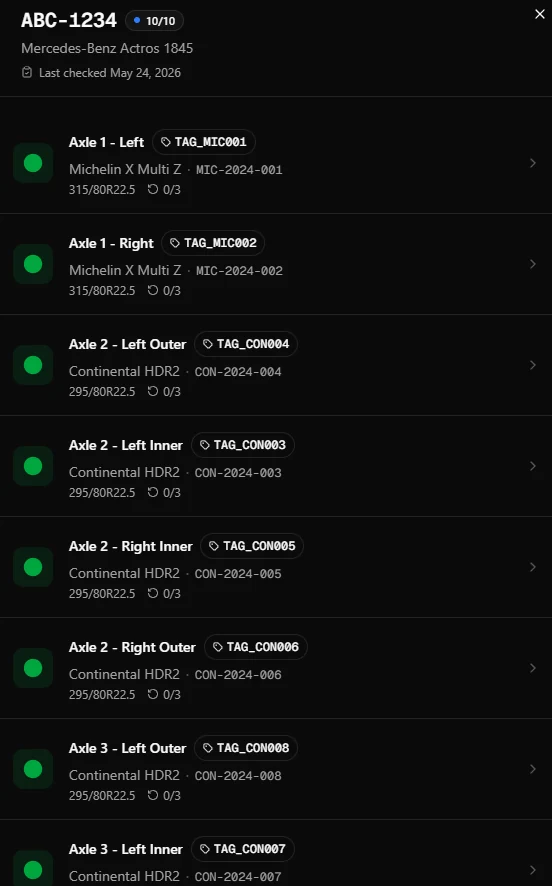
The tire's life, recorded
The tire ledger stores every event of its life: mount, rotation, tread inspection, dismount, retread, retirement. With that you measure what used to be invisible: cost per kilometer, how many retreads each brand survives and where tires are going missing.
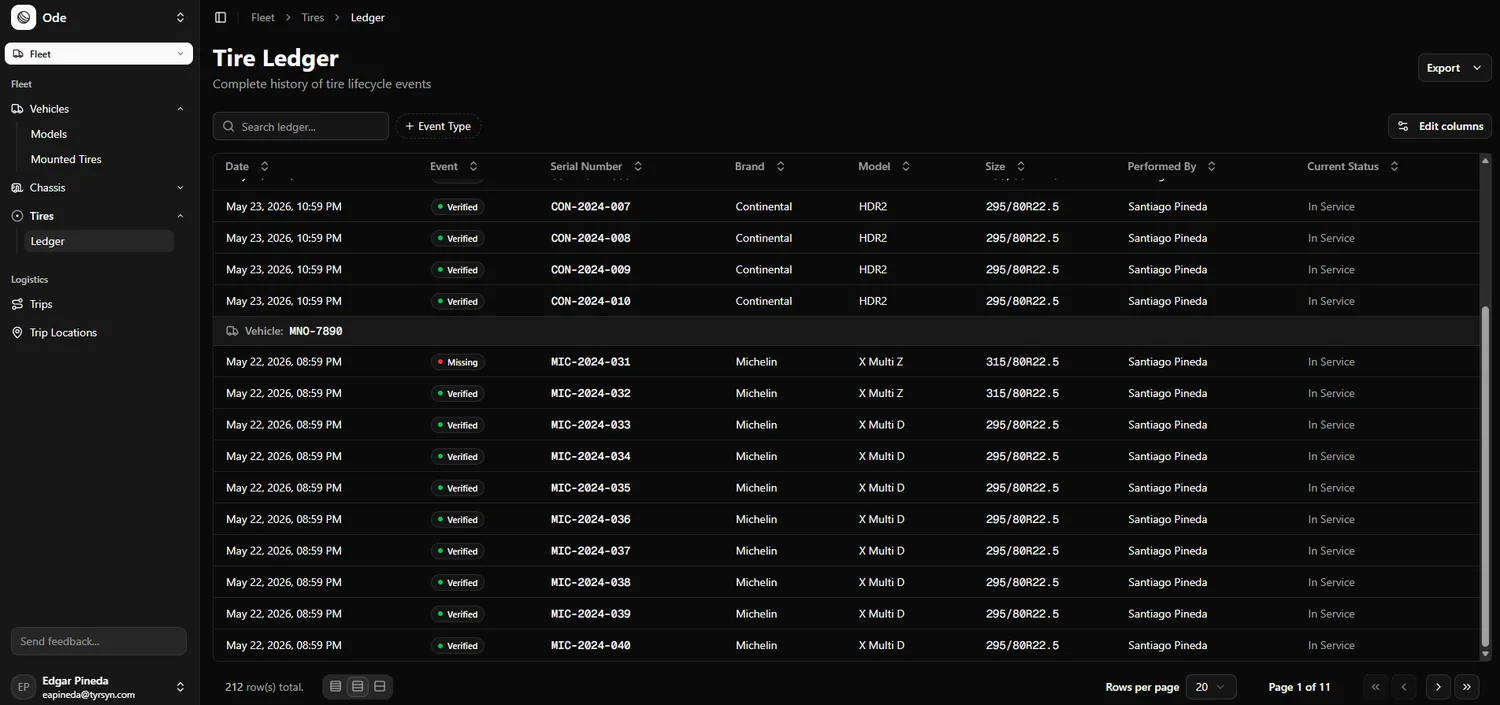
Why it matters now
Per-tire-unit traceability is the foundation of the Digital Product Passports (DPP) regulation is starting to require. Having each tire's history today isn't just cost control — it's being ready for what's coming.
Where to start
With a pilot on part of the fleet: we tag the tires, record their position and history, and you watch cost-per-kilometer appear on its own. With that measured, scaling is a business decision.